The Most Valuable Meeting Most Buyers Never Take
Every parcel in Bonita Springs comes with rules that were written long before you found it. Zoning, the land development code, flood regulations and, in many neighborhoods, private deed restrictions decide how large you can build, how close to the property line, how tall and for what use. Those rules shape value as surely as the view does. Yet most buyers discover them after closing, when the survey, the engineer or the architect delivers the news.
The City of Bonita Springs offers a wiser order of operations. Its Community Development Department accepts requests for an informal preapplication meeting, a conversation with city staff about a project before anything is filed. For a buyer weighing a homesite, a teardown or a major addition, it can be the most productive hour of the entire purchase.
Who Benefits Most
- Buyers considering a vacant homesite
- Owners planning an addition, a second story or a larger footprint
- Buyers eyeing an older home priced for its land, with plans to demolish and rebuild
- Sellers who want to know what a buyer could do with their property, so they can price and market it with authority
What a Preapplication Meeting Covers
The city describes these meetings as a chance to discuss the process in detail. They cover rezoning, development orders and building permits that touch on zoning, development services, the Florida Building Code or fire code. Depending on the project, staff from several disciplines may take part, from planning and engineering to floodplain management and landscaping. In practical terms, this is where you learn:
- The zoning district and the uses it allows
- Required setbacks from the front, side and rear lot lines
- Height limits, lot coverage and other limits on how much house the parcel can hold
- Whether an overlay district or form-based code adds standards of its own, as in parts of downtown and along major corridors
- Whether a structure may carry historical significance, which can bring its own considerations
- Flood elevation requirements that set how high a new finished floor must sit
- Which permits, reviews and studies the project will need, and in what order
The meeting offers guidance, not approval. For anything you intend to rely on, the city issues formal zoning verification letters through a separate application.
What You Can Do, What You Cannot and What You Never Knew
A single meeting often answers three questions at once. Some plans are allowed outright. Others are off the table, whether because of setbacks, height or the use itself. Now and then the code holds a pleasant surprise: a parcel that allows far more than its current improvements suggest. That last category is where highest and best use comes into focus. It is why an informed buyer sees opportunity where others see only an old house. Downtown is a prime example. Our guide to downtown Bonita Springs explains why.
Splitting or Combining Lots Is Rarely Simple
Many owners assume that dividing a lot means drawing a line down the middle. Others assume that combining two lots simply adds them together. In real estate, it is seldom what you know that surprises you. It is what you don't know.
When a parcel is split in half or into several pieces, the owner is responsible for providing water and sewer service to each new parcel. The land must be divided and developed, not merely divided. New surveys must be prepared and recorded to exacting standards, down to details as fine as the required font size. Combining lots brings its own requirements as well. In every case, the city's current code dictates what must be done for the project to be approved, permitted and finalized. A preapplication meeting is the place to learn those requirements before you buy.
Before You Tear Down, Ask What to Keep
Demolition is not always the best answer. Some older structures sit closer to a property line or a body of water than current code would allow. Those grandfathered positions can be valuable, because a new structure might never be permitted in the same spot. Ask staff what a teardown would allow. Then ask whether there is a benefit to keeping all or part of what stands there now.
The same thinking applies to trees. Ask the city's arborist which trees are worth keeping and which may be removed. If a tree comes down because it is invasive, have an independent arborist certify it in writing. The cost is modest. Years later, if someone studies satellite images and wonders where a tree went, you will have proof it was never protected.
Learn the Rules Before You Pay for Blueprints
Architectural drawings and engineering are costly to redo. Learning the limits first can keep you from paying for plans the property cannot support. You may discover, for example, that the amount of fill allowed on a lot is limited to protect neighbors from stormwater runoff. In that case the home may need to be raised on stilts rather than set on a built-up pad. That is far better to know before the first line is drawn.
Adding On or Rebuilding: The 50 Percent Rule
For an existing home in a flood zone, zoning is only half the question. Under the substantial improvement standard, widely known as the FEMA 50 percent rule, the entire structure must meet current floodplain standards once improvement costs reach 50 percent of the building's market value. Land value is excluded. Ask the city's floodplain manager how past permits count toward that total. An ambitious remodel can cross the line quietly. A preapplication conversation, an elevation certificate and a realistic budget tell you which side of the line your plans fall on before you buy. Our Bonita Springs flood zone map guide shows how to look up any address.
Vacant Land Brings Its Own Questions
On a raw parcel, zoning is only the beginning. Wetlands, protected species and native vegetation can require studies, permits and mitigation. Our guide to Bonita Springs homes on acreage covers these issues in depth.
Two Layers of Rules: The City and the Community
Inside many gated communities a second layer applies. Deed restrictions and an architectural review committee may govern size, style, materials, pools and even exterior colors. Those private rules can be stricter than the city's code. Review both before you buy with plans to build or expand. Jurisdiction matters, too. A corner of Bonita Springs, including Bonita Shores and Barefoot Beach, lies in unincorporated Collier County, where county rules apply instead of the city's.
How to Prepare
- Request the meeting through the city's preapplication meeting request form
- Upload any surveys and pertinent documents in advance, so every participant understands the scope of your project
- Photograph the land, the structure and the trees from all four corners of the lot
- Write a clear description of what you hope to build, keep or change
- List specific questions about setbacks, height, lot coverage, flood elevation, trees and allowable uses
- Include your architect, engineer or builder, if you have one
Ask staff which code sections apply, so your design team can confirm every detail.
Build It Into Your Purchase
Timing is everything. The ideal moment for this research is before you make an offer or during the inspection period. Our team builds this due diligence into the purchase from A to Z, so you know what a property can become before you are committed to it.
Selling Land or a Home With Potential?
A homesite, an older home on a valuable lot or a property that can hold more than it does today should be priced and marketed for its highest and best use. A listing strategy session with our team puts that knowledge to work. You can also begin with our home valuator or our Bonita Springs home selling guide.
A Local's View: What One Meeting Revealed
One of my own homes taught me the value of this meeting firsthand. The house had reached an age at which further improvements no longer made sense, because the land beneath it had seen zoning changes and had grown considerably in value. I had already explored a renovation. Still, I suspected the zoning would allow far more than the modest home suggested.
So I began with a preapplication meeting, requested through the city's website. Beforehand, I uploaded my surveys and other pertinent documents so everyone would understand the scope of my questions. I also stood at all four corners of the lot and photographed the land, the structure and the trees, so that every aspect of the property could be discussed.
About a day later, an email arrived with the date and time. We met online through Microsoft Teams. Half a dozen people joined from the city: a specialist with a thorough command of the land development code, an arborist, the floodplain manager, a city planner, an engineer and the staff member who led the meeting. Together they walked carefully through every option, from renovation to demolition and redevelopment.
What I learned was remarkable. The property fell under form-based code. That small single-family home, with its legacy design features, could come down. The lot could then be divided into parcels for several different uses. Just one of those options, two single-family homes with an accessory dwelling unit behind each, had the potential to turn one modest house into four residences. The requirements for redevelopment were substantial yet entirely achievable. In the end, demolition and redevelopment made far better financial sense than renovation.
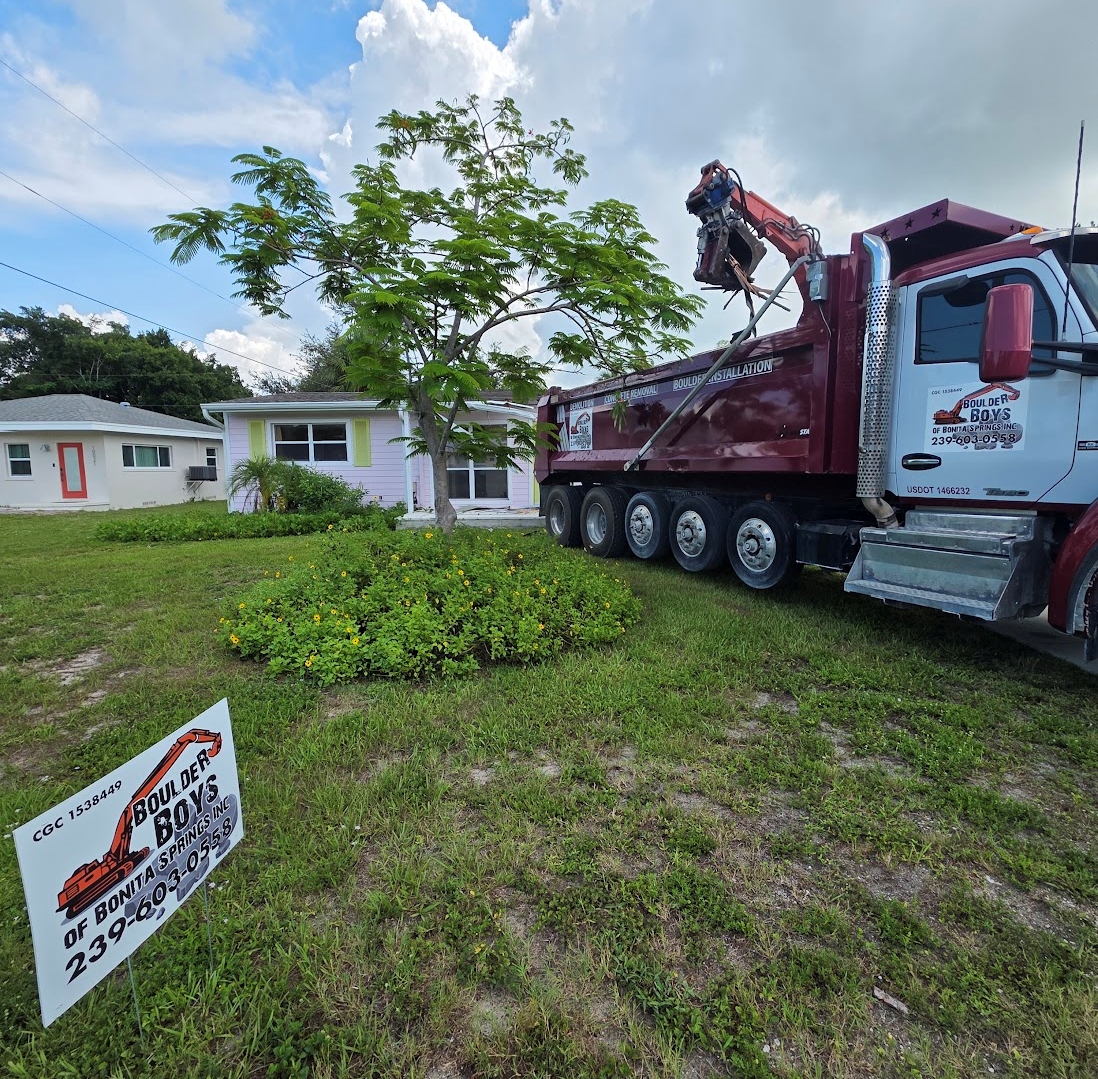
I documented every step: the notes the city sent after the meeting, the permitting, the hiring of the demolition company (Boulder Boys of Bonita Springs) and, finally, the confirmation that every permit was closed. That last step is the one that most often falls through the cracks when homeowners have permitted work done on a property.
The preapplication meeting is a wonderful service our city offers. In the grand scheme of building a home, it can save a great deal of time and money by keeping the wrong plans and the wrong dreams off the drawing board.
Ready to Explore What a Property Could Become?
Whether you are searching for a homesite, an older home with untapped potential or a lot for your next residence, our team can help you evaluate it before you commit.
Search Bonita Springs Land for Sale Schedule a Strategy Session
Frequently Asked Questions
What is a preapplication meeting in Bonita Springs?
An informal meeting with the city's Community Development staff to discuss a project and the approval process before anything is filed.
How do I request one?
Through the preapplication meeting request form on the city's Community Development website. Uploading surveys, photographs and a description of the project in advance makes the meeting far more productive.
Is the guidance binding?
No. For written confirmation of zoning, the city issues zoning verification letters through a separate application.
Can I split a lot in Bonita Springs?
It depends on the zoning and the city's current code. The owner who splits a lot is responsible for providing water and sewer to each new parcel and for recording new surveys that meet the city's standards. A preapplication meeting clarifies exactly what the project will require.
Should I always tear down an older structure?
Not necessarily. An older structure may sit closer to a property line or the water than new construction would be allowed, so ask whether keeping it offers an advantage.
Do HOA rules replace city code?
No. Both apply. In effect, the stricter rule governs.